









Are You Ready To See The Hand Of GOD Move In Your Life?
Welcome to Grace Fellowship! We’re so glad you’re here. Pastor Joe and Sally Zamarripa, along with our entire church family, want to remind you that God’s hand is moving in powerful ways—and He’s moving in your life, too. No matter where you are on your journey, we’re here to walk alongside you, encourage you, and help you discover the amazing purpose God has for you. His love, grace, and plans for your future are greater than you can imagine. We can’t wait to see how He works in your life—welcome to the family!
At Grace Fellowship, we offer a variety of ministries to meet you where you are and help you grow in your faith. From vibrant Sunday worship services to small group Bible studies, there’s a place for everyone to connect and deepen their walk with God. For families, we provide a thriving children’s ministry where kids can learn about God’s love in a fun and engaging environment, as well as a dynamic youth ministry that equips teens to live boldly for Christ.
For adults, we offer men’s and women’s ministries with opportunities for fellowship, prayer, and spiritual growth. If you’re looking to serve, our outreach ministry is a great way to make a difference in the local community, spreading God’s love through acts of service and kindness. We also have a marriage ministry to strengthen and enrich relationships, as well as a dedicated team for prayer and pastoral care to support you in times of need.
No matter where you are in life, there’s a ministry here at Grace Fellowship to help you grow closer to God and fulfill the unique purpose He has for you. We’re so excited to join you on this journey!
Welcome to "Grace Fellowship"
We are a church that believes God has a plan for each and every one of us and once we figure out why we are the way we are and why we are where we are we will explode into all that God has called us to be. Join us here at Grace fellowship and let's find our purpose in the kingdom together.
Ready To Put Your Talents To Work For God?

The World Is Ready For The Gospel Are
Are You Ready to Change It?

About KANI
KANI — Kingdom Advancement Network International — is an apostolic and relational network dedicated to equipping leaders, strengthening churches, and advancing the Kingdom of God through collaboration, education, coaching, and ministry development. Under the leadership of Apostle Edward Kirkpatrick and Abundant Life Fellowship Church International, KANI exists to connect pastors, ministries, and believers with resources, training, and kingdom relationships that empower effective ministry in today’s world. Through leadership development, Bible training, coaching, and strategic networking, KANI seeks to equip the saints, strengthen the body of Christ, and expand kingdom impact both nationally and internationally.
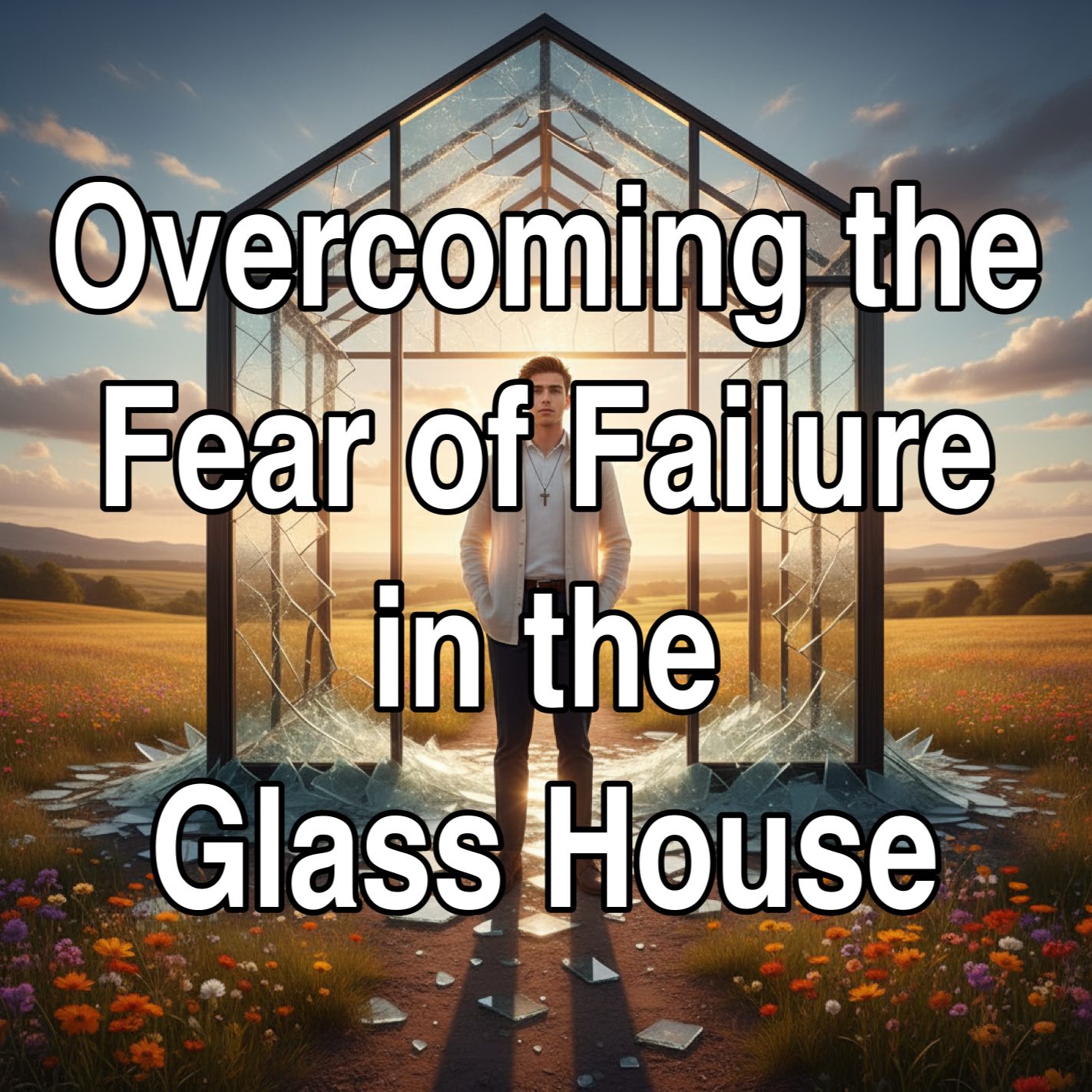
Overcoming the Fear of Failure in the Glass House
Overcoming the Fear of Failure in the Glass House
You know the heavy, suffocating feeling of a hundred eyes watching your every move. Growing up in a ministry family means your childhood is placed on a public stage. You learn quickly that your actions do not just reflect on you; they reflect on your parents, your church, and even your faith. This environment creates a beautiful, transparent, but incredibly fragile existence. We call it living in the glass house.
In the glass house, the margin for error is non-existent. You watch your parents pour their souls into the congregation, and you understand that your obedience helps keep the ministry afloat. This dynamic breeds a paralyzing fear of failure. You start to view every minor misstep as a catastrophic event that could shatter your family's reputation.
But you cannot live a full, authentic life while tip-toeing around the expectations of others. You possess a unique, profound resilience forged in the fires of intense public scrutiny. This post will explore how you can break free from the crushing weight of perfectionism. We will discuss the impact of this pressure, how to embrace your mistakes, and practical ways to cultivate deep, lasting self-compassion.
The Crushing Weight of Perfectionism
Perfectionism is the armor you wear to survive the glass house. When you feel exposed, you naturally try to control everything about your behavior and appearance. You make sure your grades are flawless, your attitude is cheerful, and your faith looks completely unshakable. You become an expert at giving people exactly what they want to see.
However, this armor eventually becomes a prison. Perfectionism demands that you never drop the ball, never voice a doubt, and never show a moment of weakness. It tricks you into believing that your worth is entirely tied to your performance. When you believe that love and acceptance are conditional, the fear of failure controls every decision you make.
You begin to avoid taking any real risks. You might abandon your true passions because they do not fit the mold of a "good preacher's kid." You silence your own voice to keep the peace. Acknowledging this painful reality is the brave first step toward your freedom. You must realize that the armor is actually holding you back from the beautiful, messy reality of being human.
Unpacking the Pressure to Perform
The pressure to meet expectations in a ministry family is unlike any other dynamic. The congregation often blurs the line between your personal identity and your family's spiritual calling. If you make a mistake, some people will inevitably treat it as a spiritual failure rather than a normal human error. This spiritualization of mistakes causes deep, lasting anxiety.
You internalize the idea that failing means you are letting down not just your parents, but the divine. That is an impossible burden for any person to carry. It forces you to suppress your natural curiosity and your need to explore the world on your own terms. You stay safely within the boundaries drawn by the church, terrified of what might happen if you cross the line.
We must gently dismantle this toxic narrative. Your mistakes are not sins against your family's calling, and they do not define your spiritual worth. You are allowed to stumble, to make wrong turns, and to figure things out as you go. Healing begins when you separate your inherent value from the rigid expectations of the sanctuary.
Reframing Mistakes as Stepping Stones
To overcome the fear of failure, you have to fundamentally change how you view your mistakes. In the glass house, a mistake was a crisis to be managed and hidden. In the real world, a mistake is simply a powerful piece of information. It shows you what does not work and points you toward a better path.
True growth requires the willingness to fail. When you look at the most resilient, authentic people in the world, you will find a long history of missteps and failures. They did not let their mistakes destroy them; they let their mistakes teach them. You must grant yourself the same permission to be a messy, learning, growing human being.
Embracing failure means standing in the light and saying, "I tried, and it did not work out." It takes immense courage to drop the mask and admit that you do not have it all together. But when you do, you strip the fear of its power. You realize that you can survive a failure, and more importantly, you realize that the people who truly love you will stay by your side.
Practical Strategies for Building Resilience
Breaking the cycle of perfectionism requires deliberate, daily practice. You cannot simply wish the fear away. You must actively train your mind and spirit to handle failure with grace. Here are practical ways to build your resilience and overcome the paralyzing fear of the glass house.
Cultivate Radical Self-Compassion
When you make a mistake, your inner critic probably sounds exactly like the harshest voices in your childhood congregation. You must actively change the way you speak to yourself. Radical self-compassion means treating yourself with the same profound grace you would offer a dear friend in the exact same situation.
When you fail, pause and take a deep breath. Acknowledge the disappointment without judging yourself. Tell yourself, "It is okay that I messed this up. I am still learning." By replacing shame with kindness, you create a safe internal environment where failure is allowed. This gentle approach slowly rebuilds your shattered confidence.
Take Small, Intentional Risks
If you have spent your entire life avoiding failure, your tolerance for risk is likely very low. You need to build your risk-taking muscle memory. Start by taking small, intentional risks where the stakes are incredibly low.
Try a new hobby that you know you will be terrible at, like painting or playing a new sport. Speak up in a meeting and share an idea, even if it feels unpolished. Allow yourself to look foolish in a safe environment. Every time you take a small risk and survive the outcome, you prove to your nervous system that failure is not fatal. You slowly teach yourself that you are strong enough to handle whatever happens.
Separate Your Identity from the Outcome
In the ministry world, your identity was closely tied to your public success. To break free, you must anchor your worth in something deeper than your achievements. You are not your job title, you are not your ministry role, and you are certainly not your mistakes.
Spend time getting to know the core parts of your soul that have nothing to do with performance. What makes you laugh? What brings you deep, quiet peace? When you anchor your identity in your authentic self, a failure simply becomes a bump in the road. It no longer threatens your entire sense of who you are.
Claiming Your Generational Anointing
Overcoming the fear of failure is a vital step in claiming your generational anointing. The book Preacher's Kids Unite reminds us that the heavy trials of our past can be reshaped into a brilliant foundation for our future. You carry the scars of the glass house, but those very scars have forged a fierce and unbreakable spirit within you.
Because you survived the intense pressure and the crushing expectations, you possess a profound capacity for empathy. You understand what it feels like to be terrified of making a wrong move. This means you know exactly how to create safe, accepting spaces for others who are hurting and afraid. Your ability to rise above your fear becomes a beacon of hope for everyone around you.
You do not have to abandon your past to find your freedom. You can take the grit, the shadows, and the beautiful resilience of your upbringing and use them to build a purposeful life. Your true calling is not about being perfect; it is about showing up in the world exactly as you are, raw and real.
Step Boldly Out of the Glass House
The glass house taught you to fear the sound of breaking expectations. It is time to realize that the sound of those walls shattering is actually the sound of your own freedom. You have the strength to walk out of the sanctuary and build a life on your own terms.
Embrace your missteps. Forgive yourself for not knowing everything. Trust the resilient, powerful spirit that has carried you this far. Take a deep breath, step out into the open air, and give yourself the glorious permission to fail, to learn, and to finally thrive.


Interested in understanding more about the kingdom of God and how you fit into God great plan? Join us and grow your spirit man
Pastor If You are interested in turning your church into a Distant Learning Center join the KANI Bible Institute Network and let's build the future for the Kingdom together.

If Life Is Overwhelming and You Are Needing
Someone To Talk To We Are Here To Help.
Here is a list of Certified Christian Counselors that are Licensed through ICCM
Pastor, If you are interested in becoming a part of our coaching team we want to hear from you.
KANI Resources
Now Let's Get Social
When we unite as one, from the KANI Leadership to each member in every KANI church, we can achieve incredible things. Unity drives lasting impact and meaningful change.
Interested In Becoming A Part of the KANI Network We Want to Talk
Learn More
realationship is the key to the kingdom so let's start one today